6 Jun 2026
Surface-Specific Patterns in Tipster Accuracy for Tennis Tournaments
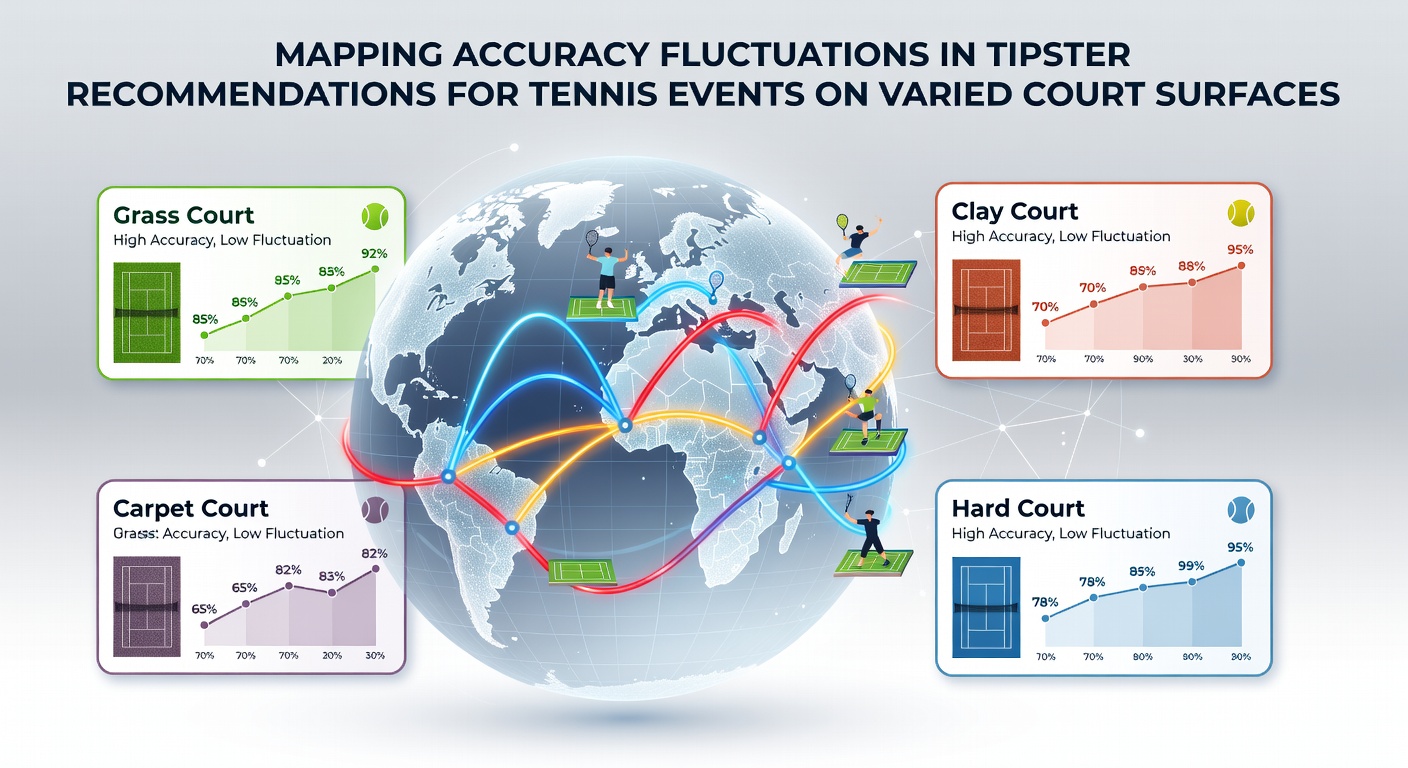
Researchers tracking tipster performance have mapped notable shifts in recommendation accuracy depending on the court surface used in tennis events, with data from major tournaments revealing consistent variations across clay, grass, and hard courts. These patterns emerge from large-scale analysis of betting tips issued throughout the 2025 season and into early 2026, where surface characteristics alter player outcomes in measurable ways that tipsters must account for when generating forecasts.
Clay Court Dynamics and Tipster Records
Clay surfaces slow ball speed and increase bounce height, which extends rally lengths and rewards players with superior endurance along with topspin proficiency, and analysts from the International Tennis Federation have documented how these conditions produce distinct win rate distributions compared to faster surfaces. Tipsters who incorporate clay-specific historical data achieve higher alignment with actual results during events like the French Open, where baseline specialists dominate, yet accuracy drops when recommendations overlook the higher frequency of upsets driven by physical conditioning factors. Studies conducted at the University of Melbourne's sports analytics lab indicate that tipster precision on clay improves by measurable margins when models weight recent performance on similar surfaces more heavily than overall season statistics.
Grass Court Variables in Prediction Models
Grass courts favor aggressive serve-and-volley tactics along with quick points, creating environments where underdogs with strong serving games can prevail more often than expected, and data compiled through June 2026 shows tipsters maintaining steadier accuracy here when they adjust for the shorter average match durations typical at Wimbledon and other grass events. Observers note that recommendations based solely on hard court results frequently underperform on grass because the low bounce reduces effectiveness of certain groundstroke styles, prompting several prediction services to refine their algorithms with surface-adjusted variables. Evidence from ATP match logs demonstrates that tipster edges narrow during grass swings unless forecasts explicitly factor in player adaptation timelines from prior surfaces.
Hard Court Consistency and Fluctuation Trends
Hard courts deliver more predictable bounce and medium pace, which supports broader data pools for tipster models since most professional events occur on these surfaces, but fluctuations still appear when humidity, temperature, and indoor versus outdoor distinctions come into play. Research published in the Journal of Quantitative Analysis in Sports highlights how tipster accuracy on hard courts holds steadier overall while still exhibiting seasonal dips during periods of high player turnover or when recommendations ignore court speed ratings released by tournament organizers. Those who've examined datasets from the Australian Open and US Open circuits report that combining multi-surface player histories reduces error rates in hard court forecasts by integrating variables absent from single-surface approaches.
Cross-Surface Data Integration Methods
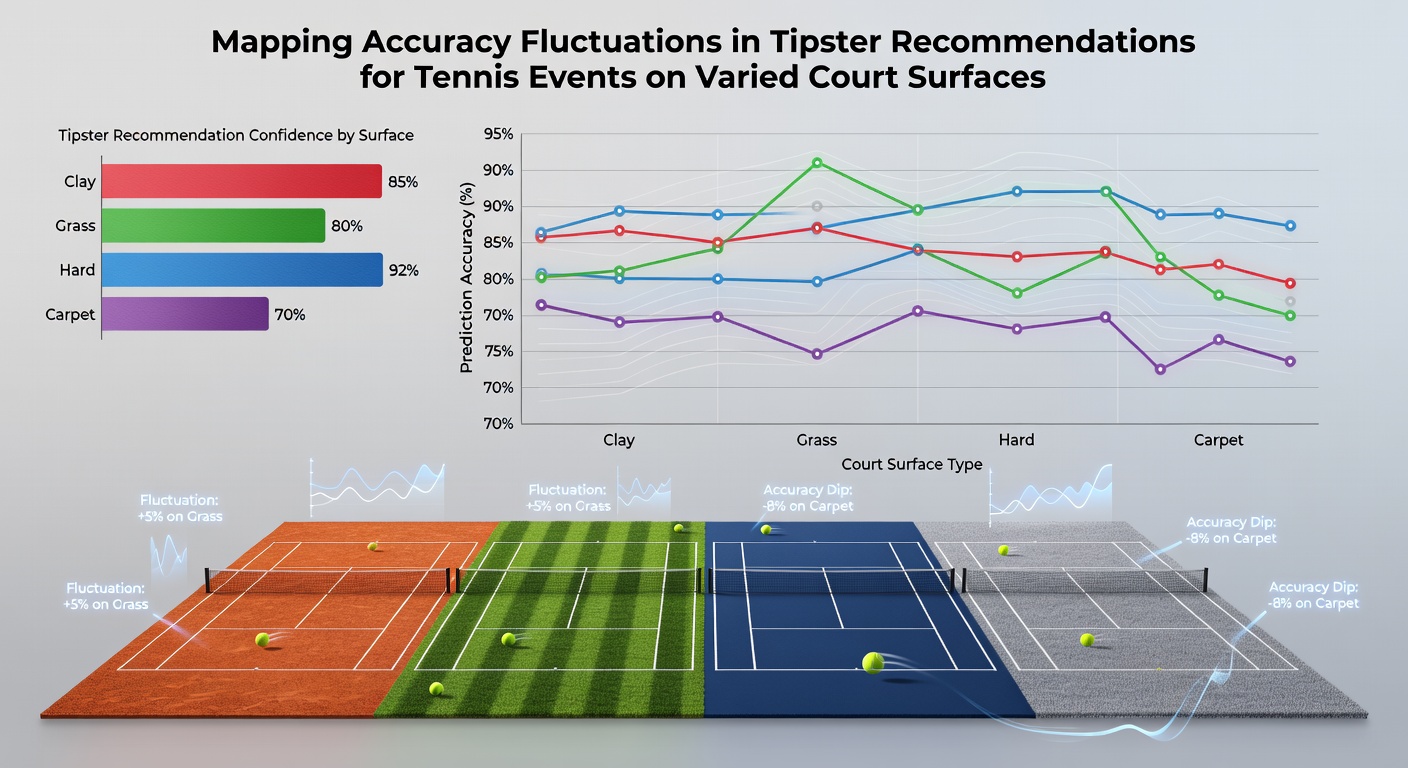
Tipster services increasingly rely on layered datasets that separate performance metrics by surface type, and organizations such as the Tennis Integrity Unit have supplied anonymized match statistics that enable more granular mapping of accuracy fluctuations. When models blend clay, grass, and hard court results without proper weighting, recommendation reliability declines noticeably during surface transitions in the calendar year, whereas targeted adjustments for bounce and speed produce tighter correlations with observed outcomes. Figures from the Canadian Tennis Research Consortium reveal that services updating their frameworks quarterly based on surface-specific win percentages sustain more stable performance across varied events compared to those using aggregate statistics alone.
Seasonal Shifts Observed Through 2026
Monitoring through June 2026 has captured how accuracy patterns evolve with the movement between surfaces on the professional tour, particularly when major tournaments cluster on one type before shifting abruptly, and analysts at the Australian Sports Commission have tracked corresponding changes in tipster alignment during these transitions. External factors including player injuries that manifest differently on each surface further contribute to fluctuations, prompting some services to incorporate real-time surface condition reports from tournament venues. Data indicates that tipsters maintaining separate historical benchmarks for each court type record fewer deviations from actual results during peak periods of the tennis schedule.
Conclusion
Mapping exercises continue to demonstrate that surface type remains a primary driver of variation in tipster recommendation accuracy for tennis events, with clay, grass, and hard courts each presenting unique statistical profiles that affect forecast reliability. Services adapting their approaches to these distinctions show measurable improvements in alignment with tournament outcomes, while those relying on uniform models encounter recurring discrepancies across the annual calendar. Ongoing collection of surface-specific data supports further refinement of these analytical frameworks in coming seasons.