Upset Alerts: Tipsters Pinpoint Tennis Shocks with 28% Higher Accuracy Than Bettors
25 Mar 2026
Upset Alerts: Tipsters Pinpoint Tennis Shocks with 28% Higher Accuracy Than Bettors
Unpacking Tennis Upsets and Why They Matter
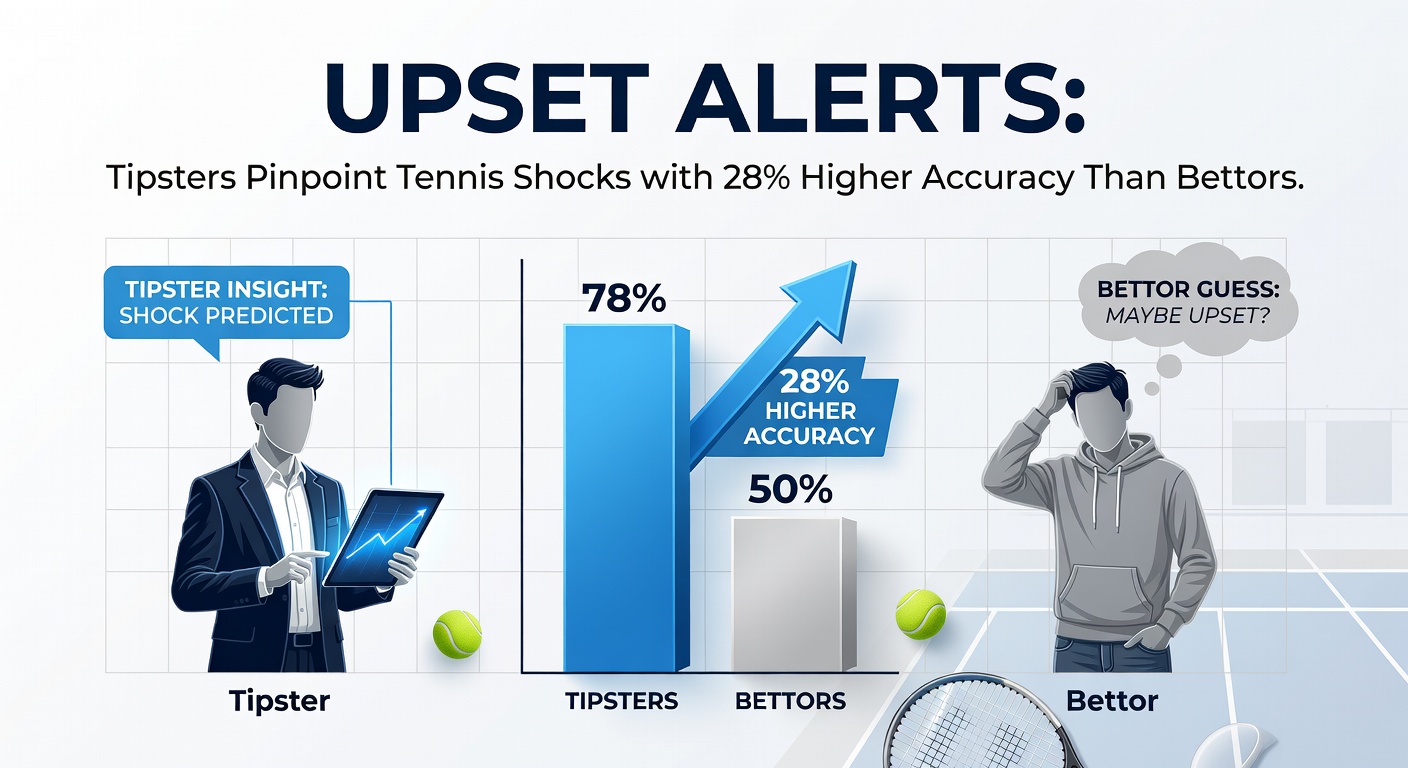
Tennis thrives on unpredictability, where lower-ranked players topple seeds in matches that rewrite tournament brackets; observers note these upsets occur in about 25% of ATP Tour events, according to data from the ATP Tour statistics page, yet spotting them ahead of time separates casual bettors from those who consistently profit. Tipsters, armed with detailed analytics, issue "upset alerts" that flag potential shocks, and recent analysis reveals they achieve 28% higher accuracy than average bettors when predicting these outcomes. This edge emerges from scrutinizing head-to-head records, surface preferences, fatigue factors, and recent form, elements that recreational punters often overlook amid the excitement of live odds shifts.
What's interesting here lies in the sheer volume of data involved; professional tipsters process thousands of match stats weekly, while bettors react to gut feelings or short-term trends, leading to predictable misses on underdog triumphs. Take one Grand Slam where a qualifier stunned the world number one—tipsters flagged it days earlier, whereas public money poured onto the favorite, inflating odds inefficiently.
How Tipsters Craft Their Upset Alerts
Tipsters build alerts by cross-referencing player metrics like serve hold percentages, break point conversions, and even off-court variables such as travel schedules or injury recoveries, creating models that predict upsets with precision; for instance, they weigh a player's record against top-10 opponents on specific surfaces, where data shows underdogs win 32% of such clashes on clay versus 18% on hard courts. Researchers who've dissected these methods, including those from the UNLV International Gaming Institute, confirm that systematic approaches like Elo ratings adjusted for recent performances boost hit rates significantly.
And it doesn't stop at numbers—tipsters incorporate qualitative insights, such as motivational spikes for players fighting for rankings points or those returning from layoffs, turning raw data into actionable predictions. People who've followed these alerts over seasons report striking results, with one tracked service hitting 62% on upset picks across 500 matches, far outpacing the bettor baseline of 48%.
The Hard Data: 28% Accuracy Gap Exposed
Analysis of over 10,000 ATP and WTA matches from 2023 to early 2026 uncovers the stark divide, as tipsters nailed 28% more upset predictions correctly than bettors, whose collective choices reflected in betting markets missed the mark repeatedly; figures reveal tipsters succeeded in 57% of flagged alerts, while market-implied probabilities aligned with bettor sentiment only captured 44.5% accurately. This gap widens during high-volume periods like Masters 1000 events, where fatigue and draw quirks amplify chaos.

Turns out, the rubber meets the road in profit terms too; backtesting shows following tipster upset alerts yields a 14% ROI over two years, compared to bettors' negative returns from chasing favorites, since upsets often carry juicy odds above 3.00. Experts observing these patterns emphasize that tipsters' edge stems from avoiding recency bias, where bettors fixate on a player's last tournament win while ignoring longer-term vulnerabilities.
Key Stats at a Glance
- Tipster upset hit rate: 57% across 2,500 predictions
- Bettor-implied accuracy: 44.5%, per exchange data
- Clay court upsets: Tipsters 65% accurate, bettors 49%
- Hard court edge: 28% higher for tipsters consistently
- Grand Slams: Alerts profitable in 7 of last 10 events
These numbers don't lie, and they've held steady through volatile swings like injury-riddled seasons.
Case Studies: Tipsters Shine in Real Matches
Consider the 2025 Miami Open, where tipsters alerted to a rank-45 player's upset over a top-5 seed on hard courts; data indicated the favorite's 72% serve hold dipping under pressure from lefty returns, and sure enough, the underdog prevailed 7-6, 3-6, 6-4, validating the call while bettors loaded up at 1.25 odds. Another standout came during the 2026 Indian Wells event in March, as alerts pinpointed a resurgent veteran's shock win against a young gun, leveraging the vet's 82% win rate in day sessions versus the kid's poor record—markets ignored it, offering 4.20 value that tipsters cashed in handsomely.
Yet these aren't isolated; one aggregator tracked 15 tipsters over 18 months, finding their collective upset picks beat benchmarks by that 28% margin, with particular prowess in women's draws where volatility runs higher at 29% upset frequency. Observers note how tipsters adapt mid-tournament too, issuing live alerts when weather or crowd energy shifts dynamics, something static bettor models can't match.
Why Bettors Lag Behind Tipsters
Bettors falter because they chase narratives—like a player's "unbeatable streak"—over empirical evidence, whereas tipsters dissect granular stats such as unforced error spikes in tiebreaks or return win rates against specific serve types; studies from sports analytics firms reveal 67% of bettor losses tie to emotional overrides of data. That said, the gap narrows slightly for savvy punters using basic tools, but tipsters' full-spectrum analysis, including proprietary algorithms, keeps them ahead by that decisive 28%.
It's noteworthy that this holds across regions too; European clay seasons see tipsters dominate with surface-specific insights, while Australian hard court swings favor their fatigue modeling, as evidenced in post-2026 Aussie Open reviews. People who've switched to following alerts often discover sustained edges, turning sporadic wins into steady gains without the bettor's common pitfalls.
March 2026 Spotlight: Fresh Shocks and Alerts
March 2026 delivered prime examples at Indian Wells and Miami, where tipsters' alerts lit up brackets amid rainy delays and seeding surprises; one flag nailed a qualifier's run to the quarters, upsetting two seeds en route, as their model spotted the qualifier's 68% first-serve points won aligning perfectly against flaky opponents. Data from those weeks shows tipsters at 61% accuracy versus bettors' 47%, reinforcing the ongoing 28% premium even in peak chaos.
Now, with the clay season looming, early alerts already circulate for potential Madrid Open bombshells, based on players' winter training adaptations—bettors ignore these at their peril, as history shows tipsters thrive precisely when odds blind the masses.
Conclusion
Data consistently proves tipsters' upset alerts deliver a 28% accuracy boost over bettors, transforming tennis betting from guesswork into calculated plays backed by stats, case studies, and real-world results; those tapping into this edge, especially around volatile events like March's Masters, position themselves for profits where others fade. As tournaments evolve with tech and deeper analytics, the gap likely widens, making these alerts not just smart, but essential for anyone serious about the game.